
Tyrrell County Probate Records Office
Probate in Tyrrell County is handled through the Tyrrell County Clerk of Superior Court. North Carolina does not use a separate county probate court for this work. The State Court Structure Map for this project identifies the probate office as the Clerk of Superior Court as ex officio Judge of Probate. That means estate administration, wills filed after death, guardianships, and many special proceedings start with the clerk's office, even though the office also keeps ordinary court records.
The clerk's office is at the Tyrrell County Courthouse, 403 Main Street, Columbia, NC 27925. The court mailing address is Tyrrell County Courthouse, PO Box 406, Columbia, NC 27925. The main phone number is (252) 766-6510, and public court hours are Monday through Friday, 8:30 a.m. to 5:00 p.m. The county page names Angie Sexton as Clerk of Court and lists Angie.sexton@nccourts.org for the clerk.
The North Carolina wills and estates help topic is the official statewide starting point for estate terms and probate process context.
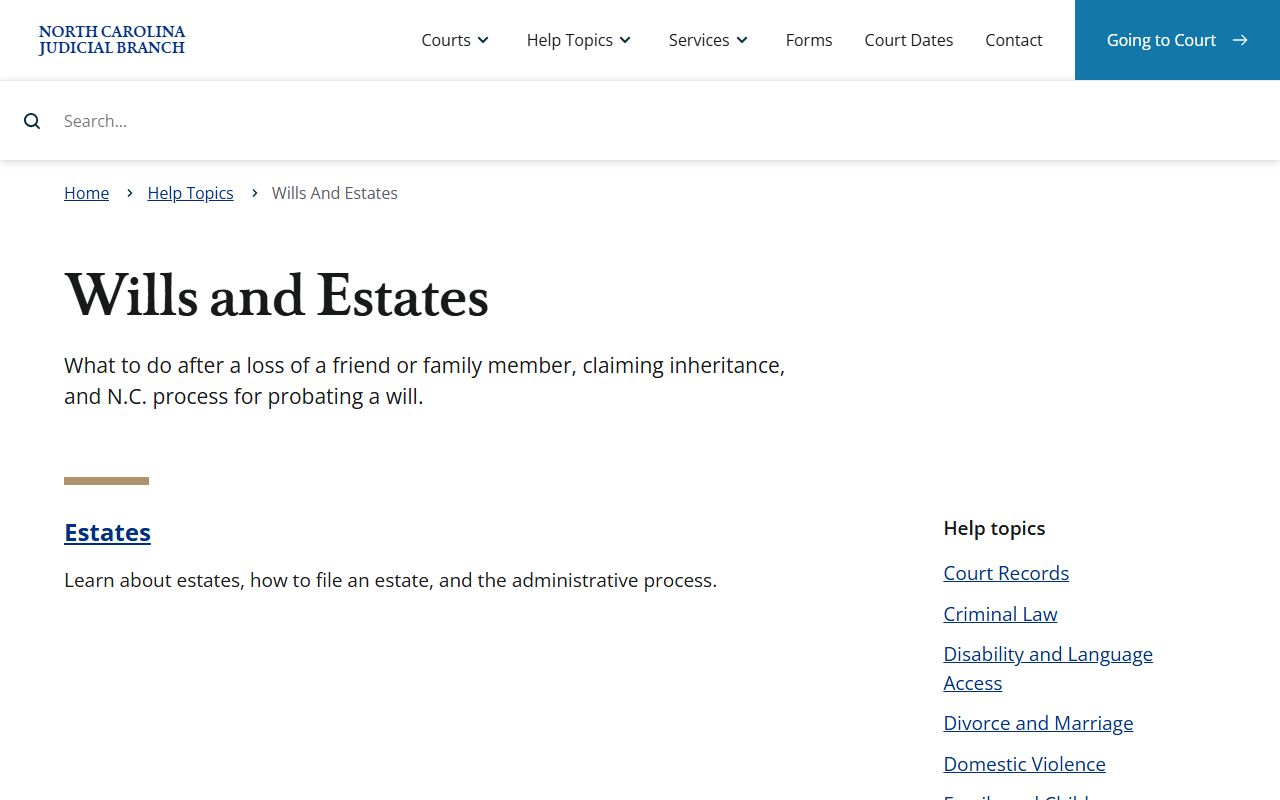
The statewide wills and estates page helps define the process, while the Tyrrell County clerk handles the local file and certified copy requests.
Clerk of Superior Court as ex officio Judge of Probate
Clerk: Angie Sexton
403 Main Street
Columbia, NC 27925
Mail: PO Box 406, Columbia, NC 27925
(252) 766-6510
Angie.sexton@nccourts.org
Monday-Friday, 8:30 a.m.-5:00 p.m.
Tyrrell County Probate Terms
Probate files use terms that are easy to mix up because one person may be called a different name at different stages of an estate. These definitions use plain language for the terms most likely to appear in a Tyrrell County estate, guardianship, or special proceeding file. They also help separate a will record from a later estate administration record.
- Testator
- The person who made a will.
- Executor
- The person named in a will to carry out estate duties after death.
- Intestate
- A death without a valid will, which usually means estate property is handled under state law.
- Guardianship
- A court or clerk proceeding to appoint someone to manage personal or financial interests for a minor or incapacitated adult.
- Conservatorship
- A protective arrangement for property or financial affairs, often discussed with guardianship terminology in North Carolina records.
- Special proceeding
- A North Carolina case category often handled by the clerk, including estates, partitions, foreclosures, and some property matters.
Tyrrell County Probate Record Types
Tyrrell County probate records can include more than a will. Estate files may show an application to administer an estate, qualification of a personal representative, bond, inventories, accountings, receipts, orders, claims, and a final account. If a decedent owned real property, the probate file may connect with deeds, liens, judgments, partitions, or other land-related records kept by other offices.
Guardianship files may involve adults or minors. Special proceedings can include foreclosures, partitions, condemnations, and property matters that affect an estate or protected person. The Judicial Branch court-record access page says civil, special proceeding, and estates information can be accessed at public self-service terminals in clerk offices, but the court file itself is viewed through the clerk in the county where the case is located.
- Estate administration files for decedents with property or claims.
- Wills filed after death and related probate orders.
- Inventories, accountings, receipts, bonds, and final accounts.
- Guardianship records for minors or incapacitated adults.
- Special proceedings such as partitions, foreclosures, and condemnations.
- Liens or judgments affecting estate property.
Search Tyrrell County Probate Records
Start with the North Carolina eCourts Portal when searching for public estate or special proceeding case information. Portal availability can vary by case type, document access, and conversion history. If the file is not fully visible online, use a public terminal at a clerk's office or contact the Tyrrell County Clerk of Superior Court for local file inspection and copy options.
- Search Portal by decedent, party, petitioner, guardian, attorney, or case number when known.
- Use the county filter for Tyrrell County to avoid statewide results with similar names.
- Check the case type for estate, special proceeding, guardianship, or probate-related wording.
- Use a public self-service terminal if online access does not show enough information.
- Request copies or certified copies from the Tyrrell County Clerk of Superior Court if the file is local.
| Field Label | Type | Required | Notes |
|---|---|---|---|
| Name | Text | Optional | Search by decedent, party, guardian, petitioner, or attorney where supported. |
| Case Number | Text | Optional | The best identifier when known. |
| County | Dropdown or filter | Optional | Select Tyrrell County for local results. |
| Case type | Filter | Optional | Look for estate, special proceeding, guardianship, or probate categories. |
| Date range | Date filter | Optional | Useful for older estates or filings. |
Tyrrell County Probate Fees
Specific Tyrrell County probate filing fees were not separately found in the research beyond statewide court-cost resources and the clerk copy-fee principle. The official court-cost page should be checked for current estate and special proceeding costs, and the clerk should confirm copy or certification charges before a request is mailed. Probate costs can depend on the type of estate, the filing, and whether certified documents are needed.
| Item | Amount | How to Confirm |
|---|---|---|
| Estate filing or administration cost | Confirm with clerk | Use the official court-cost page and Tyrrell clerk phone. |
| Guardianship filing | Confirm with clerk | Costs may depend on proceeding type. |
| Special proceeding filing | Confirm with clerk | Partitions, foreclosures, and related matters may differ. |
| Plain or certified copies | Fee applies | Ask the clerk for current copy and certification charges. |
Note: When the research does not provide a specific local probate amount, the page should point to official cost sources instead of inventing fees.
What Tyrrell County Probate Records Show
A Tyrrell County probate record may show the case number, case type, filing date, decedent or ward name, applicant, personal representative, guardian, attorneys, and a timeline of case events. In an estate file, events may include application, qualification, bond, inventory, accounting, order, and final account entries. Financial entries may appear where court costs, fees, or balances apply.
Documents may be viewable in Portal in some cases, but sensitive or older documents may require clerk-office access. Restricted guardianship or minor details may be limited. If real property is involved, related deeds or recording rules may lead to Register of Deeds material, but the estate case itself remains a clerk file.
The Tyrrell vital record copy rules are not probate rules, but they show why users should separate vital records from court estate files.
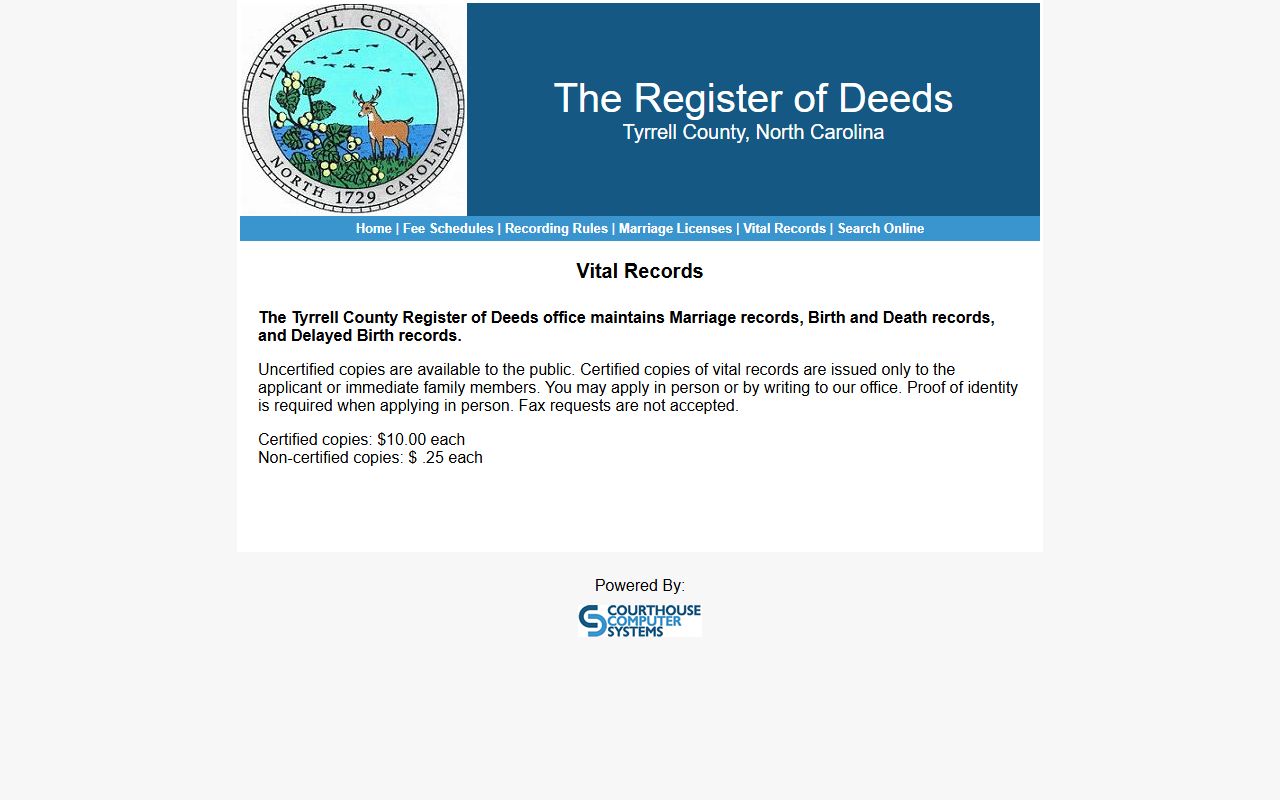
Vital records may identify family events, but estate files and guardianship proceedings are requested through the clerk's court-record process.
| Field | What It Shows |
|---|---|
| Case number | The court identifier for the estate or special proceeding. |
| Case type | Estate, guardianship, special proceeding, or related category. |
| Filing date | When the probate matter opened or an event was filed. |
| Decedent or ward | The person whose estate or protected interests are involved. |
| Representative or guardian | The person appointed or seeking appointment. |
| Events | Applications, inventories, accountings, orders, and final accounts. |
Restricted Tyrrell County Probate Records
Probate access is public in many estate matters, but not every filing is open in the same way. Guardianship records, minor information, mental-health-related material, sealed filings, financial account data, and personal identifying information may be restricted or redacted. North Carolina public access law also does not require a public office to create a new record that does not exist.
The Register of Deeds recording rules and redaction materials are useful when probate intersects with land records. The Tyrrell recording rules page explains local recording standards for documents that may affect real property.
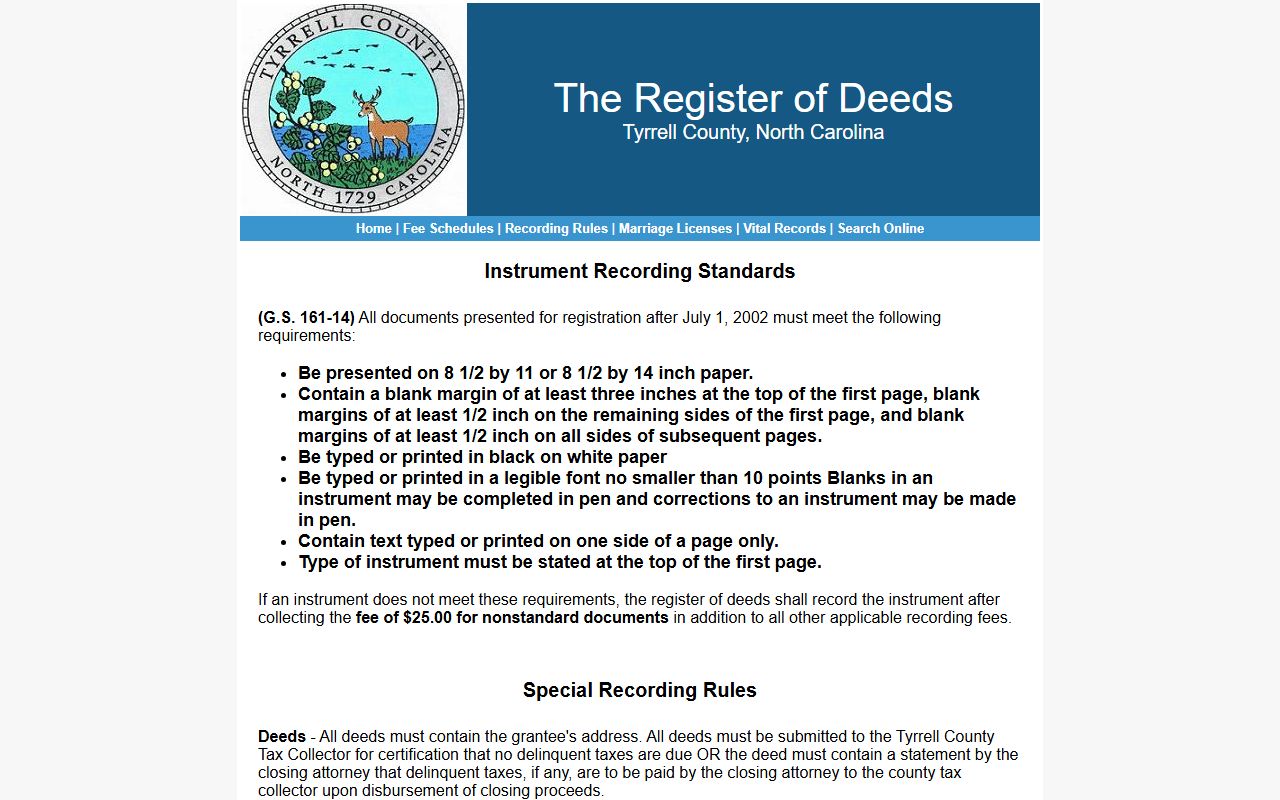
Estate-related property transfers may require both probate-file review and a separate check of recorded instruments through the Register of Deeds.